THE BRAIN
Monitoring dials down
Improvising lifted activity in the medial prefrontal cortex and lowered it in the dorsolateral prefrontal cortex, a pattern the authors link to acting without conscious monitoring.
See what changed doodlerap
WHAT THE RESEARCH SAYS
Freestyle is improvised poetry on a beat.
See what changed
8 BARSmade up live
Scientists at the US National Institutes of Health scanned rappers switching between a memorised verse and pure improvisation over the same beat. The difference showed up in how the front of the brain shares out control.
Updated
THE SHORT ANSWER
One 2012 brain-imaging study, two language studies
and a party in the Bronx.
THE BRAIN
Improvising lifted activity in the medial prefrontal cortex and lowered it in the dorsolateral prefrontal cortex, a pattern the authors link to acting without conscious monitoring.
See what changedTHE RHYMES
A 2015 University of Manchester linguistics study found rappers used half-rhymes like hop and rock over 70% of the time, rather than exact rhymes like cat and mat.
See the numbersTHE ROOTS
The Smithsonian traces hip-hop to a back-to-school jam in a Bronx apartment block's recreation room on 11 August 1973.
Read the storyINSIDE THE SCANNER
Pick a measure to see how it changed when rappers improvised instead of performing memorised lyrics over the same 8-bar beat. The bar shows whether it went down, stayed level or went up.
From one fMRI study of 12 professional freestyle artists. Brain imaging shows where activity changes, not exactly what each region is doing.
TWO NUMBERS WORTH KNOWING
One figure on who was scanned,
one on how rappers rhyme.
12 rappers
Professional freestyle artists scanned
Each had 5 to 18 years of paid performing experience. Their verbal fluency scores were above the 80th percentile, which the authors say shows the language skill the genre demands.
THE SCAN · SCIENTIFIC REPORTS 2012
> 70%
Rhymes that were half-rhymes
An undergraduate linguistics study of debut-album tracks found half-rhymes such as hop and rock outnumbered exact rhymes such as cat and mat.
THE RHYMES · MANCHESTER 2015
In the scanner, rappers performed over an 8-bar instrumental track at 85 beats per minute, with a cue at the start of the eighth bar to signal the end of each segment.
A PRACTICE LOOP FROM THE LAB
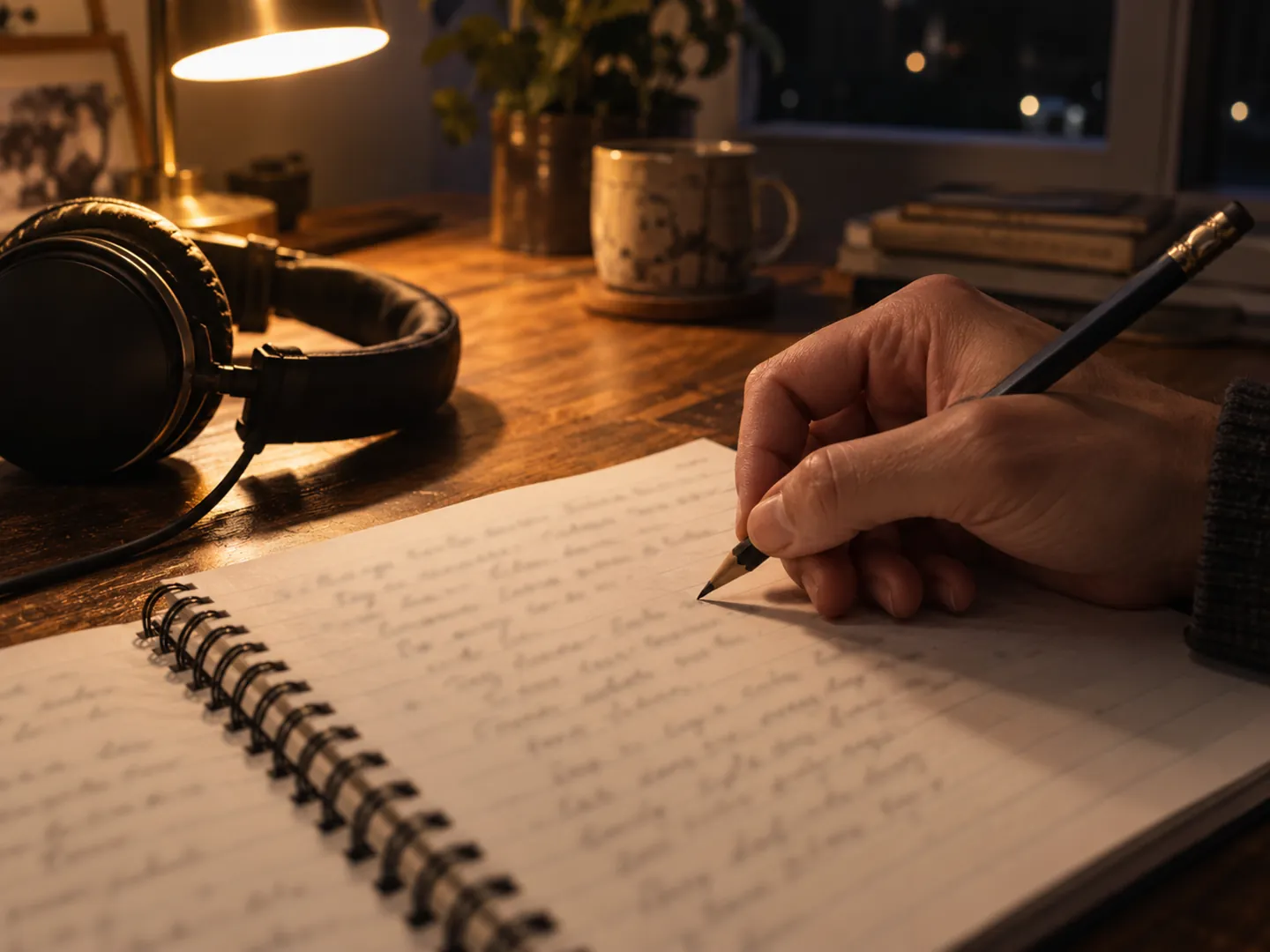
The study's set-up doubles as a simple way to practise: one steady beat, short segments, and a rehearsed verse to compare against.
The researchers used one instrumental track at 85 beats per minute for every take, so the beat stayed the same and only the words changed.
Eight bars was the unit of the experiment. A cue at the start of the eighth bar told rappers the segment was ending.
Rappers learned a set verse a week ahead and performed it on the same track before improvising, giving a fair comparison.
Near rhymes like hop and rock were the norm in the Manchester study, so they are not a cheat: they are how the genre usually rhymes.
WHERE IT STARTED
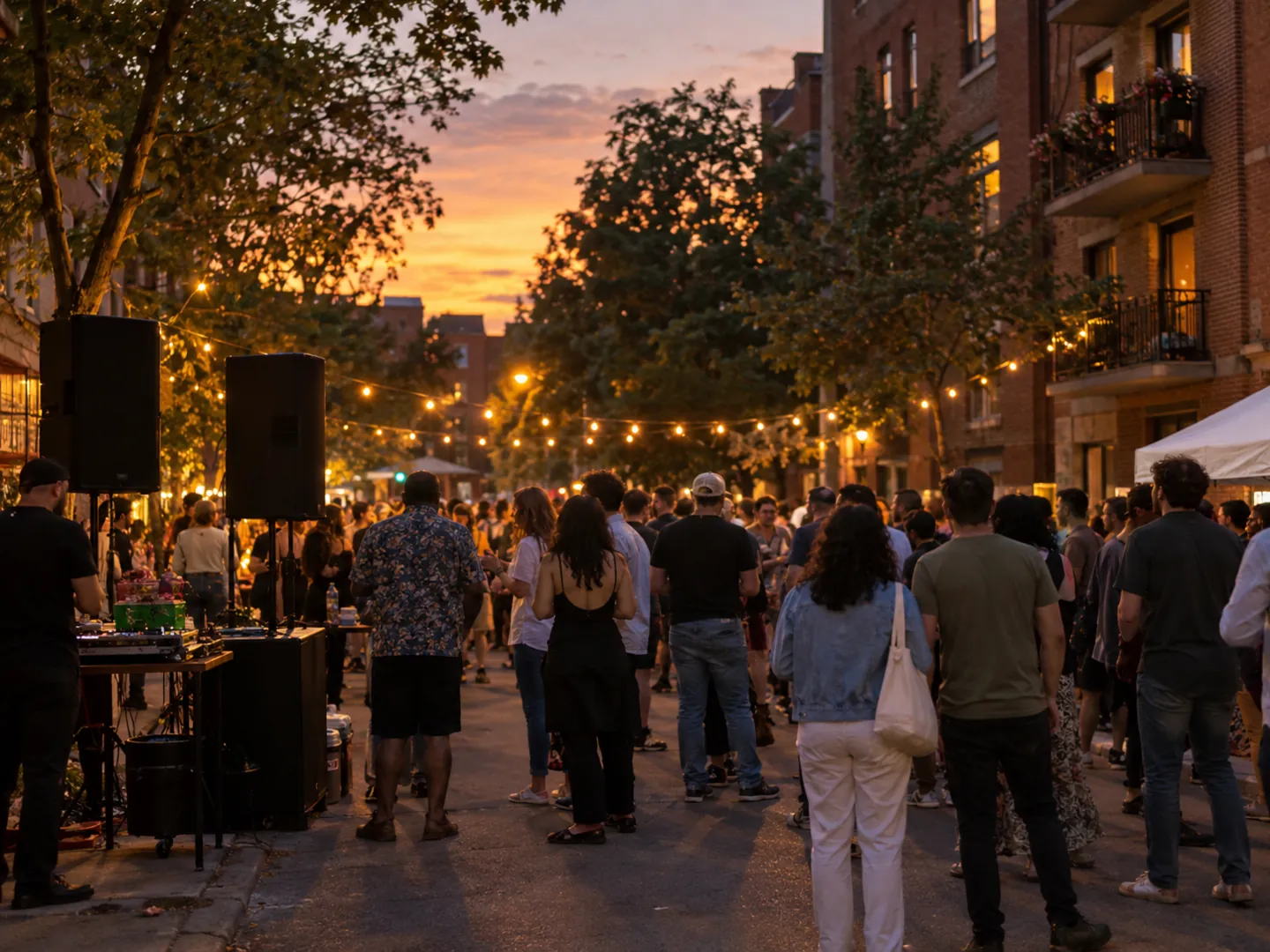
The Smithsonian tells how a brother and sister threw a back-to-school jam on 11 August 1973 in the recreation room of 1520 Sedgwick Avenue in the West Bronx, New York. Entry was 25 or 50 cents, and the night grossed $300.
The dance spilled outside into a neighbouring playground and became the first of a series of block parties. A Smithsonian curator describes the block party as a community gathering, and that spirit of community as the roots of hip-hop.
Questions
Rapping lyrics that are improvised on the spot rather than written and rehearsed. The 2012 Scientific Reports study compared exactly this with performing a memorised set of lyrics over the same beat.
In 12 professional artists, improvising raised activity in the medial prefrontal cortex and lowered it in the dorsolateral prefrontal cortex. Language and motor areas on the left side were also more active.
Not in the 2015 University of Manchester study. It found half-rhymes such as hop and rock were used over 70% of the time, rather than exact rhymes such as cat and mat.
A 2011 PLoS ONE study found that young adults who listened to more hip-hop artists knew more African-American English vocabulary, and were more likely to know words their favourite artists used in lyrics.
The Smithsonian dates hip-hop's birth to a back-to-school jam held in a Bronx apartment block's recreation room on the night of 11 August 1973.
ABOUT THIS NAME
doodlerap.com is part of the DoodleSale portfolio. It isn't in an auction right now, but you can ask about leasing it.